
5 Ways to Get Proactive on Sanitation - and Protect Your Brand
One customer killed, dozens hospitalized, more than 100 sickened, and a global restaurant chain whose reputation for quality and food safety was left reeling.
In a major 2024 E. coli outbreak tied to a global quick-service chain, FDA investigators found dozens of violations at a facility run by the supplier of the chain’s “slivered onions” - which were shown to be the origin of the 14-state outbreak.
If that’s not clear enough, on the first page of the FDA’s Form 483, the inspectors wrote: “You did not implement your sanitation preventive control, monitoring, corrective action, and verification procedures.”
This crisis underscores why it’s so crucial for companies to be proactive about sanitation.
What the FDA Found:






Numerous pieces of equipment with large amounts of food debris
Pooling water found near the cutting area and on the floor and equipment
Failure to practice sufficient handwashing
Incorrect formulation for cleaning chemical mixtures
Failed hazard analysis that did not identify preventive controls
Failure to monitor sanitation and maintain corrective action and verification records
Where Sanitation Ends, Production Begins (Not the Other Way Around)
In this guide, you’ll see 5 steps that will help your company shift from a reactive approach to a “seek and destroy” sanitation program that helps prevent the next food contamination outbreak.
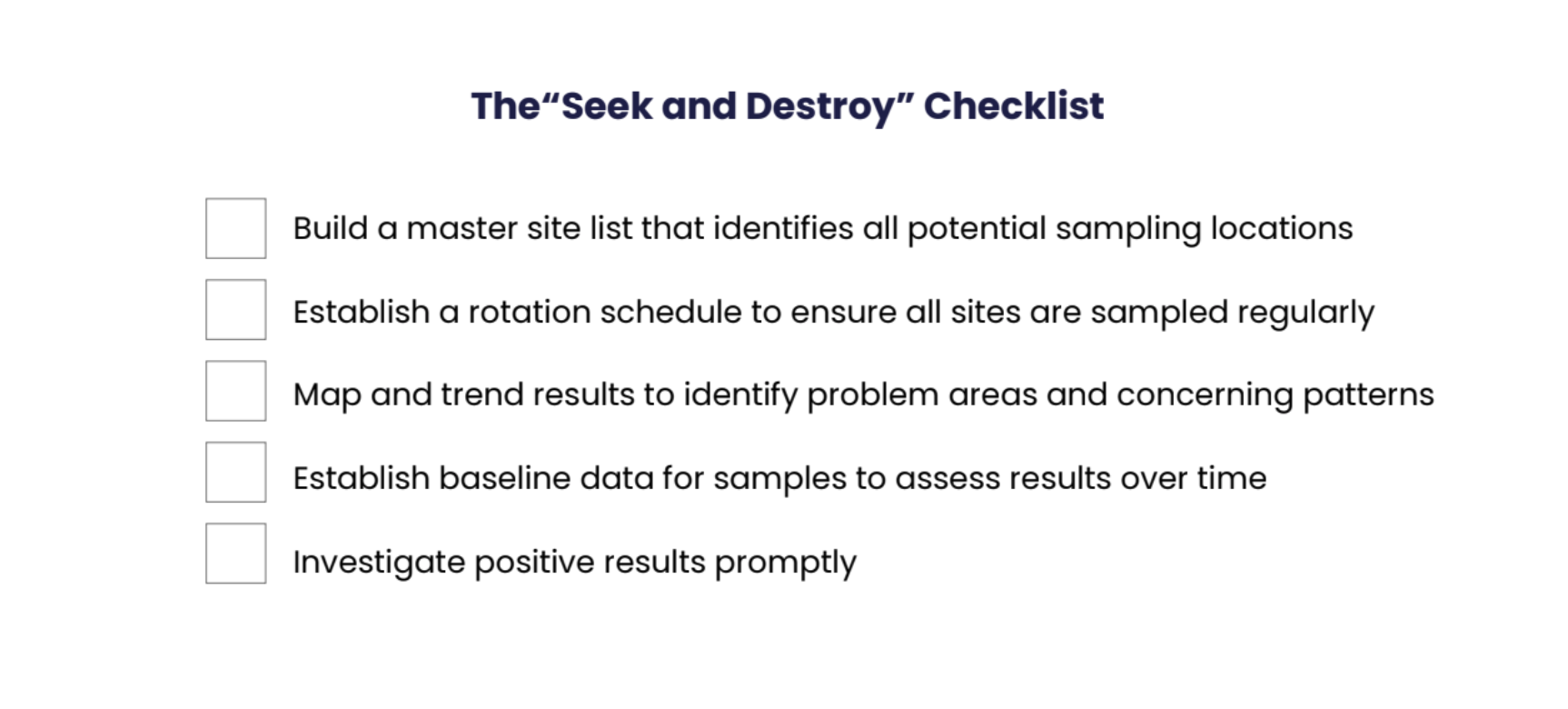
1.) Adopt a "Seek and Destroy" Mindset
Remember: Just because you haven’t found a positive result yet, it doesn’t mean you’re in the clear - it just means you aren’t looking hard enough.
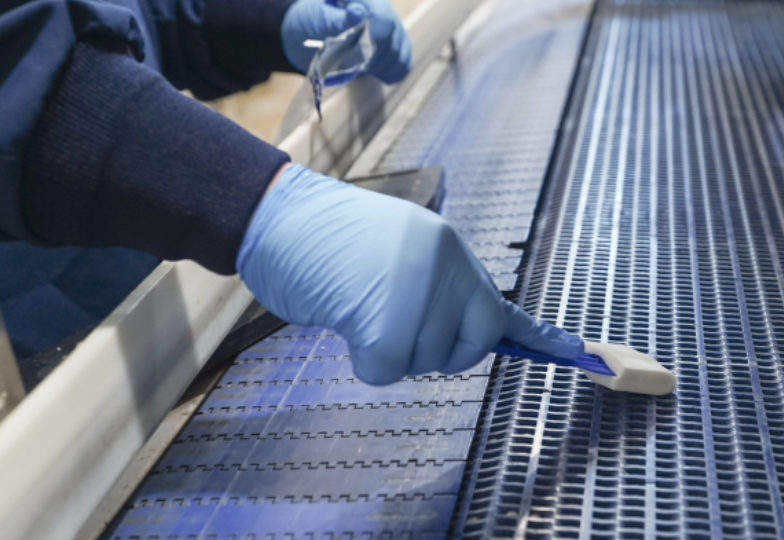
An effective Environmental Monitoring Program (EMP) requires a proactive approach that sees pathogens as inevitable in the workplace. Swabbing the same handful of locations won’t get the job done. You must check hard-to- reach spots and remember that if you can reach an area to swab it, so can an auditor.
The Risk Mapping Strategy
Sampling must be carefully planned and mapped. When building your master site list for swabbing locations, break down the facility into the following zones:
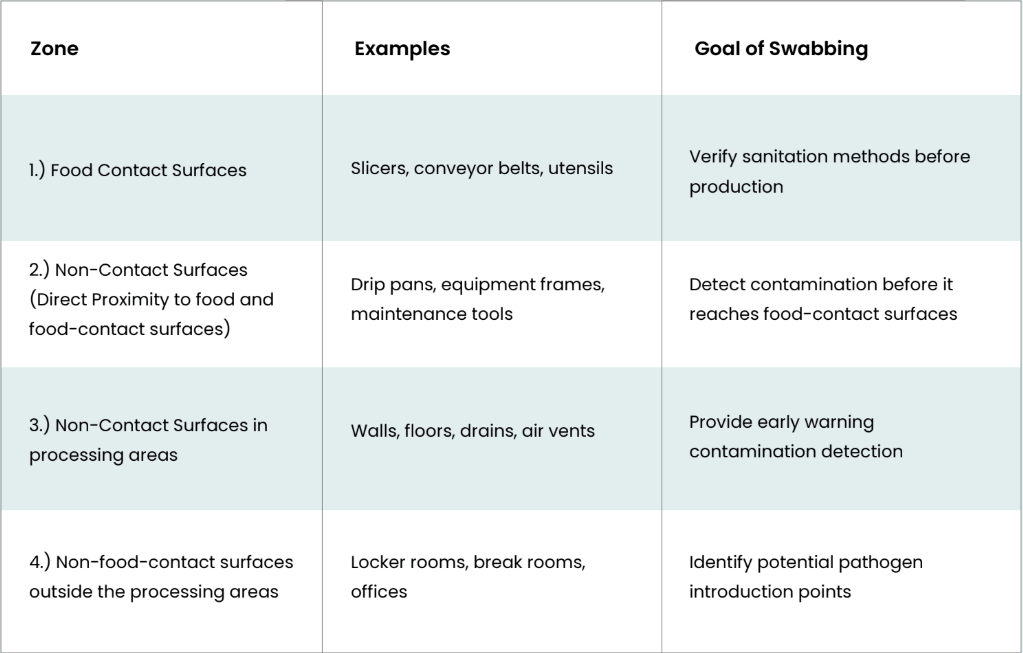
Conducting a risk-based environmental assessment for a facility’s EMP is also a key update in SQF 10, and one that every facility must meet to stay compliant.
Learn more about the requirements of SQF 10 in our free guide Building a Strong Food Safety Culture: Your Roadmap to SQF Edition 10.
2.) Focus on Hygienic Design and Zoning
Preventing contamination is easier if you remove the nooks and crannies where these threats can hide, before production begins.
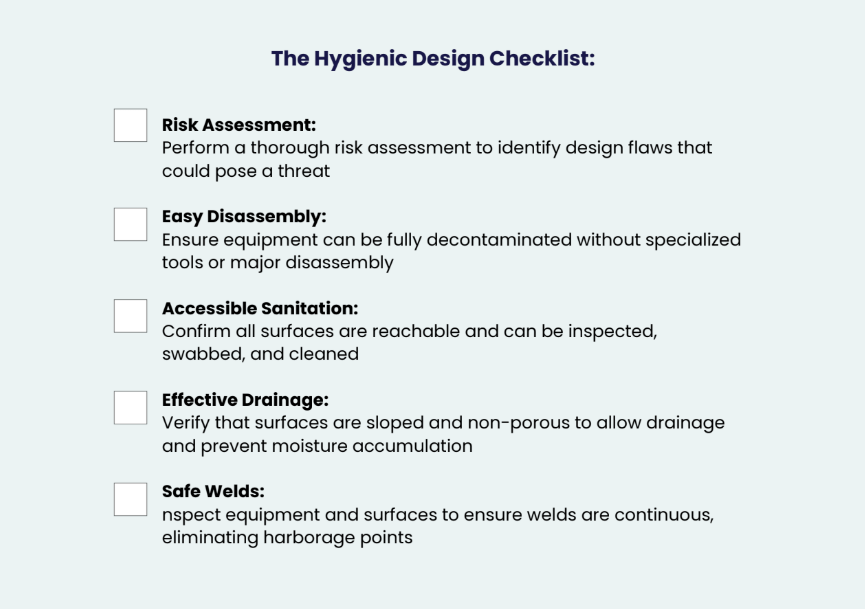
But even with the best-designed equipment and facilities, hygienic zoning is essential to prevent cross-contamination between different zones in a facility.
How to Implement Hygienic Zoning

Step 1:
Conduct a thorough risk assessment and walk-throughs to identify high-risk areas

Step 2:
Use visual cues and color coding to map the facility according to hygiene requirements

Step 3:
Ensure traffic flows from high to low hygiene areas to prevent cross-contamination

Step 4:
Define the sanitation demands for each hygienic zone

Step 5:
Get your team the right equipment and train them how to manage hygienic zoning
3. ) Ensure Maintenance and Sanitation Teams Work Together
Preventive maintenance goes hand in hand with hygienic design in that it helps preserve equipment and facilities so that cracks, holes, and other harborage areas don’t develop. But to be fully effective, it requires effective communication and collaboration between the maintenance team and the employees responsible for sanitation.
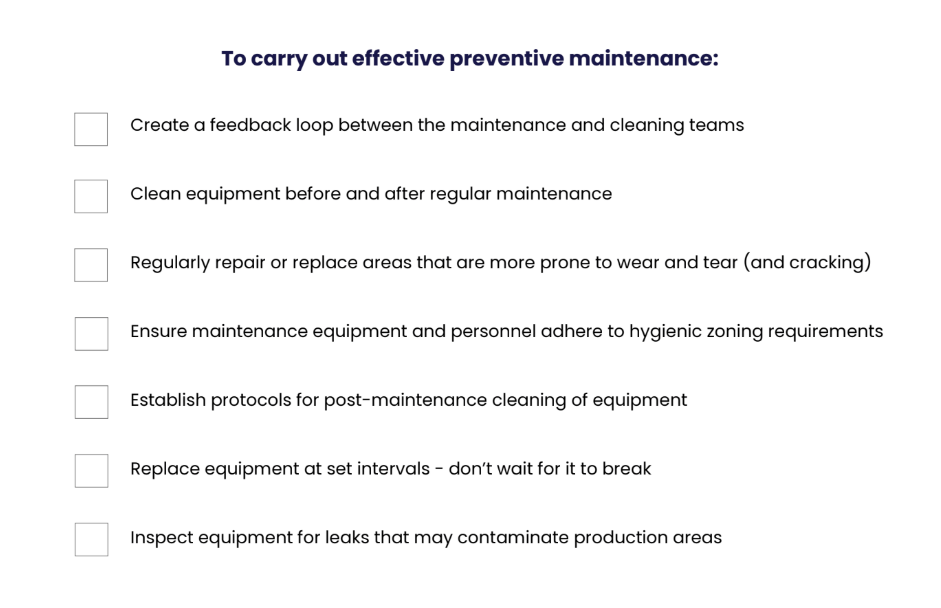
Empower Both Teams for Safety
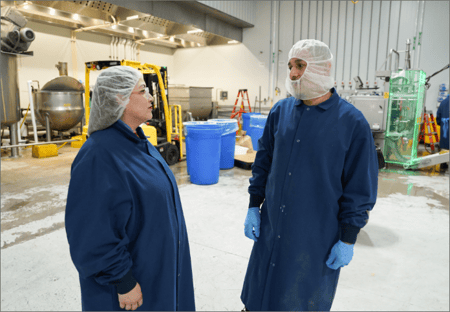
The maintenance-sanitation feedback loop works most effectively if both teams can speak up about potential safety issues. The maintenance team must be aware of food safety and hygienic zoning protocols and be empowered to speak up if they notice potential issues and even halt production to carry out necessary maintenance.
The sanitation team and your frontline workers must also be empowered to report potentially dangerous maintenance and equipment issues as they encounter them.
4. ) No Assumptions - Verify and Validate in Real Time
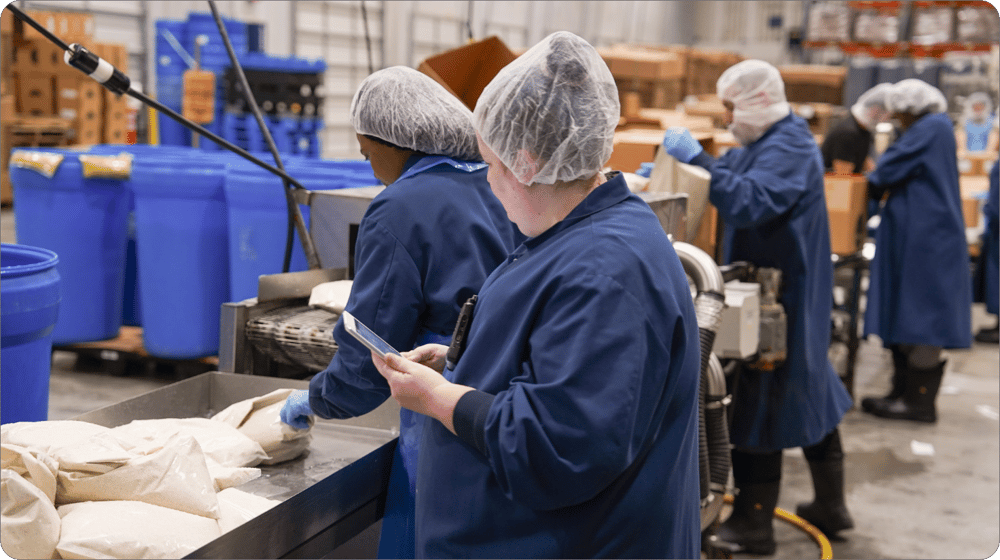
Sanitation doesn’t end just because the work shift is over. It requires a dynamic, proactive approach and repeated, consistent validation and verification measures.
Often (erroneously) used interchangeably, these concepts have two very different goals:


Validation:
“Are we doing the right things?”
To validate your food safety and sanitation plan:
- Determine the threats you need to eliminate and
the methods you will use to do so
- Collect scientific research and data that support
the efficacy of the control measures
- Identify worst-case scenarios (heavy production
runs, production that includes a high level of allergens, etc)
- Perform the control measures on-site and collect
data on the results
- Have a qualified food safety expert sign off on
the validation report of your methods
Verification:
“Are we doing things right?”
To verify your food safety and sanitation measures:
- Appoint qualified experts to oversee the verification
process
- Determine which processes and parameters must
be verified
- Verify that all essential equipment (like thermometers and scales) works as needed
- Observe employee actions on the production line
to ensure adherence to guidelines
- Sample and test surfaces and products and
carefully document your Environmental Monitoring Program
Validation and Verification measures must be reassessed regularly for a variety of reasons. These include updates to ingredients, recipes, or suppliers, new product formulations, new equipment, and to regularly assess the effectiveness of your HACCP plan and food safety plan.
5.) Train and Empower Your Team
The best-laid sanitation plans are only as good as the employees tasked with carrying them out. Management must fully buy into training and invest the resources needed.
Effective, in-depth onboarding is essential, but training does not end once employees have completed their orientation.
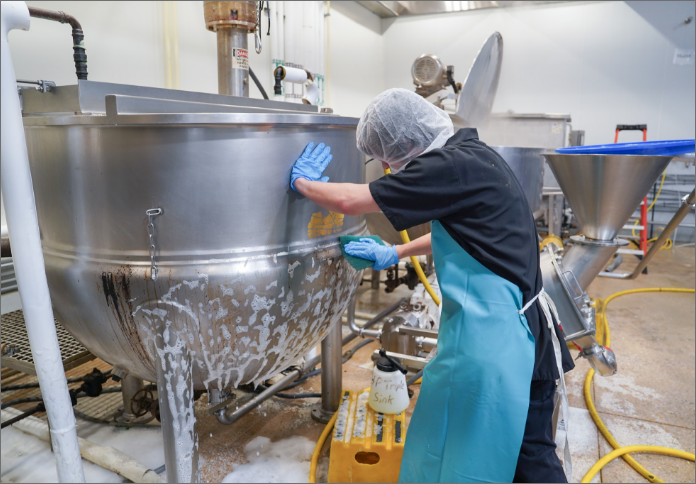
The Training that Sanitation Needs



Multilingual and Accessible:
Develop onboarding and training that is in your team members' native language and ensures they know the "why" behind sanitation practices.
Move Away from "Tick the Box" Training:
Training should not be solely an annual "check the box" obligation. It should be repeated continuously through bite-sized training focused on specific hazards, integrated into the workflow.
Develop Custom Training:
Avoid generic training and create trackable, custom learning modules that address the real-life issues your team faces in the workplace.
Above All: Empower Your Team for Safety
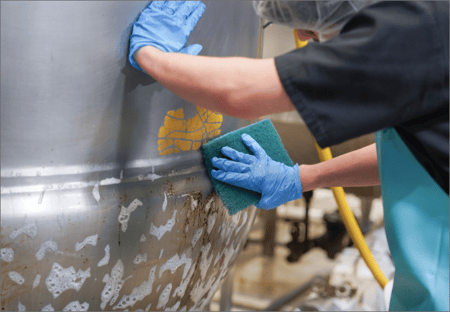
The best food safety and sanitation training can only go so far if your team members don’t have the backing to put it in place. Management must instill a “see something, say something” mentality in employees and the knowledge that they can stop the line if a hazard emerges - be it a damaged piece of equipment, a dripping ceiling, or a violation of hygienic zoning protocols.
Master Sanitation with Rootwurks
Culture First: The Rootwurks platform was designed first and foremost to help companies build training that supports a stronger food safety culture
Unique Learning: Easily create custom, data-driven training that speaks to your unique needs and resonates with your team membersEasy Onboarding: Built with the busy food industry workday in mind, the platform makes it easy to swiftly onboard employees in no time, even at multiple locations
Streamline Operations: Replace the paper binders with digital tools that improve recordkeeping, consistency, and quality.
From Reactive to Proactive: Back up your sanitation measures with data and recordkeeping, and stay proactive on risk management