
Built to Scale or Bound to Fail?
7 Red Flags in Your QSR Training Program
The Quick Service Restaurant industry is a juggernaut in the American economy, with more than $350 billion in revenue in 2025 alone.
The Average Number of Branches Among the Top 50 National QSR Chains:
2,965
Average Annual Revenue per Chain:
$3,948 million
Average Annual Revenue per Branch:
$2.13 million
The Quick Service Restaurants industry is a juggernaut in the American economy, with more than $350 billion in revenue in 2025 alone.
Known for fan-favorite menu items and a popular brand that resonates deeply with consumers, it’s an industry built for scalers.
Of the top 50 national QSR chains, each averages just under 3,000 branches and $2.13 million in annual revenue per location. The business models, dining experiences, and menu offerings at fast casual restaurants are designed for expansion, and the predominant motivator for QSR owners is to grow and take the brand further.
But if expansion charges ahead without the right training in place, the whole operation can go off the rails.
Training for the fast dining industry means overcoming many challenging hurdles. These include high turnover rates, the need to maintain standards across a large number of branches, technology and language barriers, and the need for customized, efficient learning that doesn’t slow down the workflow.
In this Rootwurks free guide, we’ll look at seven red flags in training that can stifle any QSR expansion plan. It also includes a short quiz to gauge how many of these red flags have been planted in your training plans, and how to remove them.
Red Flag 1:
Everyone is Nodding and Smiling - but are They Learning?
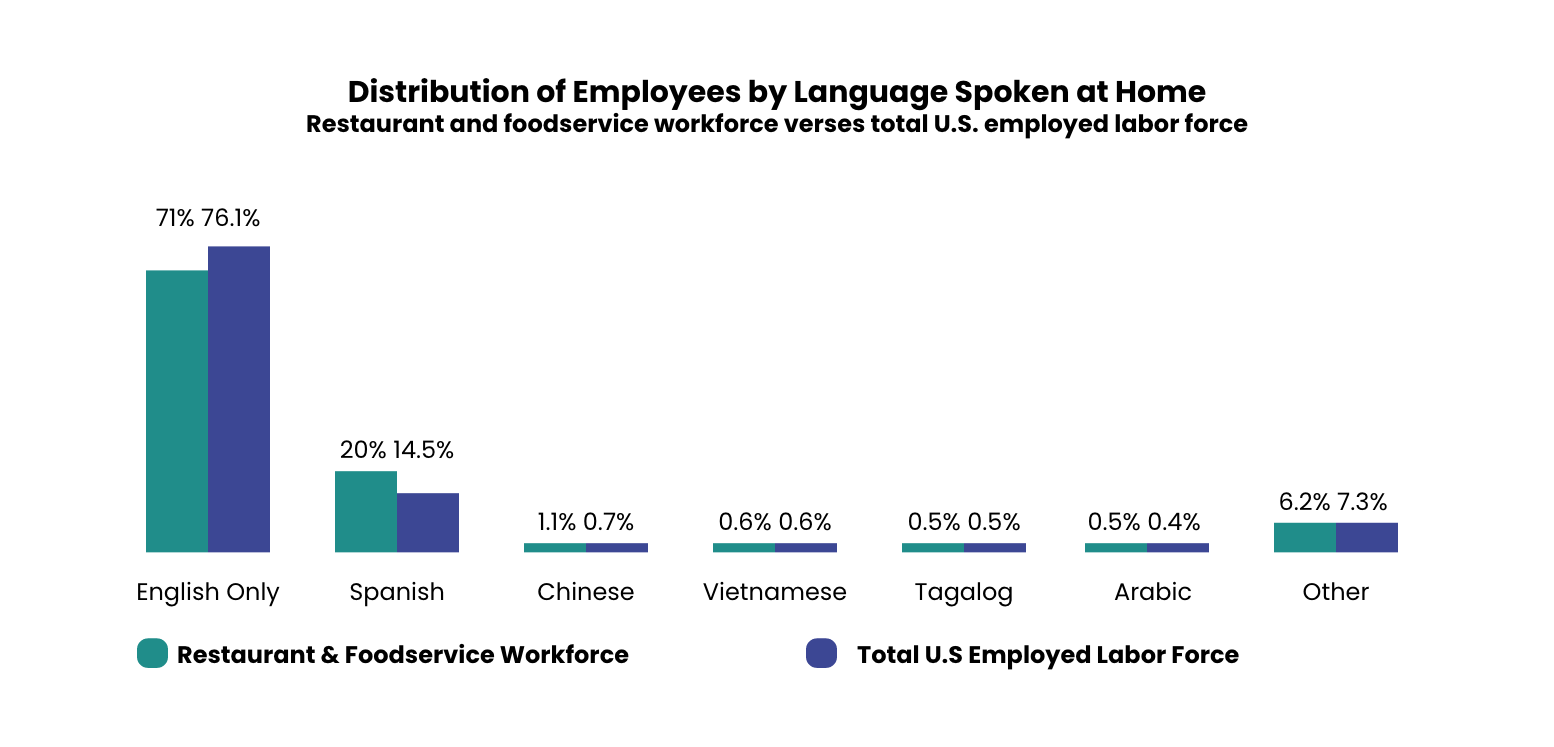
You may have seen this before. A new hire or one undergoing new training is given guidance in English, even though it isn’t their native language. Perhaps you’ve been the one nodding and smiling, hoping it's not obvious.
The 'nod and smile' method might get you through a social dinner in a foreign language, but it’s a liability on the QSR floor.
According to statistics compiled by the National Restaurant Association, 29% of restaurant and food service workers don’t speak English at home. Moving up the ladder, 28% of managers and 23% of supervisors speak a language other than English at home.
A 2025 comprehensive review published in Current Research in Nutrition and Food Science stated that research has found that “food safety training conducted in the native languages of migrant workers translates to a 50% knowledge gain.”
The impact of this training shortcoming can be grave. Employees feign understanding in an attempt to be polite, even though they have not actually grasped the safety or SOP requirements. Without this understanding, they may be much more likely to commit food safety violations and less able to maintain quality standards.
The best intentions and most sophisticated training methods mean little if learners cannot understand the language in which guidance is given. Multilingual training is a must.
Red Flag 2:
Trainees are Shadowing Veteran Employees - and Both are Losing Efficiency

At a quick-service restaurant, so much of training and safety rests on the shoulders of your veteran employees.
Your veteran employees can be the best mentors your new hires could ask for. During onboarding, it makes sense for management to tell new hires to shadow a veteran employee on the restaurant floor. The “go follow Mike around” approach can be an effective way for new hires to learn real-life applications of workplace training, but it can’t be a 1-for-1 replacement for standardized training or certified food safety managers.
Why the shadowing method falls short

Mike Has Off Days Too:
If Mike is having an off day or cuts corners on the job, then these bad habits are likely to be adopted by the new hire.

Lack of Consistency:
“The right way” of doing things can depend on who is working on a given shift. For businesses that are scaling up, this can make it much harder to maintain consistency.

Time is Money:
At a fast casual restaurant, the workflow is hectic, and every minute counts. Shadowing slows operations for both the veteran employee and the new hire, harming productivity and often leading to predictable results.

Who is Keeping Records?
The veteran doesn’t have time to teach the shadowing employee and also keep records. If an auditor asks for a record of training, saying simply “I watched Mike do it” isn’t going to cut it.
Four methods that work better than shadowing:




Explain the why:
Teach the new hire the reasons for the safety protocols
Demonstrate:
Show how to correctly perform the protocols and follow up regularly to gauge comprehension.
Trial and Error:
Have the trainee perform the task while management observers
Standardize SOPs:
Teach new hires guidelines that meet the same standard, no matter who is on shift.
Red Flag 3
Training Happens Back in the Office, Away from the Floor
What happens with training that doesn't include on-the-job implementation?
People forget 50% of the information presented within one hour
People forget 70% of the information presented within 24 hours
People forget 90% of the information presented within a week
.png?width=1492&height=615&name=Chart%20(1).png "Chart (1)")
The traditional form of training, where a manager heads into a break room, dims the lights, and throws on an instructional video, will almost always fall short. This is especially true for QSRs. where the pace is hectic, the profit margins and margins of error are slim, and turnover is high.
The Ebbinghaus Forgetting Curve theory asserts that memory retention fades quickly if we don’t work to retain it. For fast dining establishments, this means training that is reinforced “in-the-flow-of-work” is more likely to be retained as processes become second nature for employees.
Training that happens in a breakroom won’t be reinforced in real time and may, at times, appear more theoretical to employees than actual on-the-job training.
This form of training takes employees away from the workfloor, slowing down productivity and creating a feeling among employees that tahe training is divorced from the work, and an administrative burden that they have to check off a box.
Training should happen where work happens. It should be augmented with digital training assets integrated into the workplace to guide employees through tasks in real time and enforce key safety guidelines throughout the workday.
In addition, “the breakroom PowerPoint” training format falls short because it doesn’t empower employees to take an active role in the training. It positions training as a necessary lecture to sit through, rather than an exchange of ideas and best practices reinforced in real time.
Red Flag 4:
The Binder Burden
In 2023, McDonald’s reported that in the final quarter of 2022, mobile order-and-pay purchases accounted for 35% of sales in the chain’s 6 biggest markets. And in 2024, the National Restaurant Association published a report finding that 52% of restaurant operators plan to incorporate technology into back-office functions such as payroll and compliance.
Clearly, in an era of QR-code menus, food delivery apps, and AI-generated branding and ad campaigns, traditional training methods need a digital makeover.
Unfortunately, too many fast casual eateries still rely on paper training manuals kept in greasy, well-worn binders somewhere in the back office.

Death by Binder
Outdated, manual training methods stifle training and innovation:
Learning happens in a static setting, taking learners away from the workflow
Training guidelines and protocols can’t be updated instantly across company locations
Updating recipes requires printing and shipping new menus
Cumbersome training methods stifle efforts to make operations more agile and dynamic
How the Binder vs Digital Race Plays Out

Limited-Time Promotions:
Digital training guides instantly update staff at all locations on updated recipes and serving guidelines. With the binder method, limited-time offers can’t be used to their fullest, as management must first print and distribute paper guides.

Culture Shock for Your Team:
In QSRs, the workforce skews young, with a higher-than-average percentage of digital natives. Presenting them with paper training guides takes them out of their element, potentially increasing dissatisfaction and even turnover.

Always at Arms Reach:
Digital, mobile-ready training can be accessed instantly at any location from a mobile device. Paper methods take workers out of their element and may discourage team members from seeking guidance. Also, the ability to access digital training records can be a game-changer during surprise audits, when the ability to prove you completed mandatory training - and when you completed it - is of paramount importance.
Red Flag 5:
Training Content is Generic, One-Size-Fits-All
Without naming any specific burger chains, QSRs pioneered the dining concept of “having things your way.” Shouldn’t your company’s training be the same?
Every fast casual restaurant has a unique menu, branding, and overall company DNA. But too often, companies lean on generic training methods that don’t directly address their establishment's safety and quality control needs, resulting in poor outcomes.
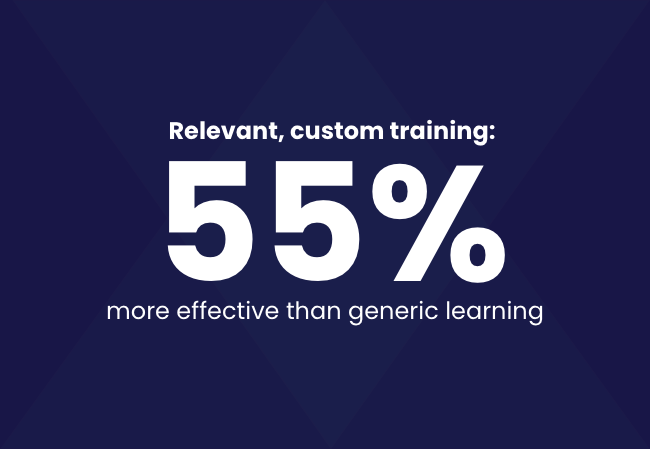
Ardent Learning’s 2024-2025 industry analysis cited research that found training aligned with real-world scenarios that directly affect a learner’s job is 55% more effective than generic training.
Stay Unique, Stay Engaged
In almost any line of work, most employees don’t care for being taken away from their daily tasks to perform necessary training. The work won’t stop while they’re gone, and they’ll still have all the same tasks to perform before they can clock out.
The key is to keep them engaged. Employees who are engaged in the learning are far more likely to retain the training because they see it as relevant to their workday. If they’re herded into the breakroom and the manager throws on a training video that looks stuck in the 90s, in which the restaurant looks nothing like where they work, they’re much more likely to check out.
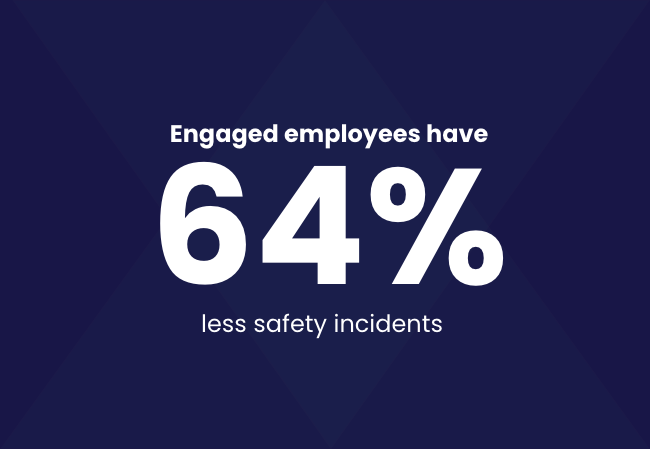
Engaged employees have 64% less safety incidents Engaged employees are also less likely to leave or make mistakes. A 2023 Gallup meta-analysis found that employees who are actively engaged at work are less likely to seek employment elsewhere. It also found that engaged employees have 64% less safety incidents.How the Binder vs Digital Race Plays Out

No Real Life Application:
Learners don't see their own challenges and experiences in the training

Users Tune Out:
Learners are less likely to pay attention, and less likely to retain training

Repeated Work Slowdowns:
Training is more likely to need to be repeated, leading to more work stoppages and less revenue

Training Stays Static:
Generic training doesn’t reflect new updates to menus, compliance, or safety protocols
Red Flag 6:
Employees Keep Falling Off the 90-Day Cliff
From the moment that a new employee is brought on board, fast dining establishments are in a costly race against time.
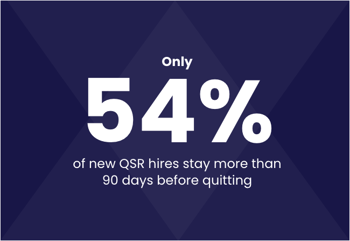
An industry study published in 2023 found that in 2022, only 54% of QSR employees stayed at a new job for more than 90 days before quitting. Also, in 2022, the National Restaurant Association listed 6 main reasons employees leave hospitality companies, including lack of growth opportunities (23%), pay/benefits (22%), poor job fit (20%), and workplace culture (17%).
Many of these employees may see leaving within 90 days as a way to cut their losses and get to the next, better job sooner rather than later.
How to Talk Employees Down from the Cliff

Start Strong:
The battle against high turnover begins before a new employee even steps onto the floor. QSRs must make a concerted effort to hire the right candidates and offer competitive compensation to attract applicants who might look elsewhere.

Streamline Onboarding:
During the first 30 days, new hires learn the workflow, company culture, and their daily expectations. Focus on bite-sized, micro-learning and mobile-friendly training modules that boost competence and get them back to the workfloor swiftly.

Reinforce Training and Culture:
Revisit training guidelines to help avoid early burnout and avoid workplace safety and quality mistakes. Reinforced training also keeps employees engaged and feeling supported as the newness of the job wears off.

Stay Constructive, Offer Praise:
As the 90-day mark nears, management should circle back with new hires to gather their impressions of their positions. This keeps them engaged and shows that you value their input.
Before and After the 90-Day Mark
Create a Growth Pathway:
Without growth opportunities, employees often see QSR positions as dead-end jobs. Fast casual restaurants that show new hires a pathway to become shift leaders or managers, with better benefits, conditions, and a job title, create incentives for employees to stay.
Professional Credentials:
Enable employees to acquire professional credentials and skills. This increases the value of the job and encourages employees to stay by showing them that they aren’t just earning a paycheck - they are gaining career assets.
Red Flag 7:
The Compliance Black Hole
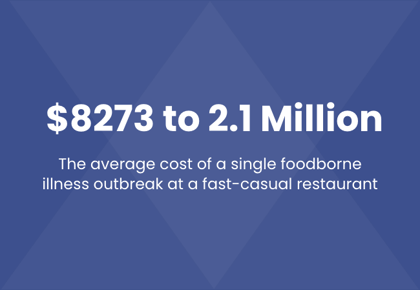
A single case of foodborne illness can cost a restaurant millions in legal fees and pummel the brand reputation across thousands of locations.
During a failed health department audit, “I’m sure everyone did the training” won’t cut it.
Verify and Validate Training in Real Time

Digital Recordkeeping:
Paper logs are a liability in 2026. QSRs must keep digital records of safety training that they can access at a moment’s notice during an audit - because if you can’t prove it, it didn’t happen.

Trackable Training:
Digital training logs help restaurants avoid redundant training by tracking which employee completed which training, when it was performed, and where they need improvement. This helps spot knowledge gaps and get employees back on the floor faster.

Agile SOPs:
Food safety compliance guidelines are always evolving. Digital compliance management platforms enable companies to instantly update Standard Operating Procedures across all locations without paper binder logjams.

Enhanced Safety and Quality Control:
Real-time tracking helps restaurants spot regulatory obligations that may get overlooked during the chaos of the workday and pinpoint where safety and quality control standards are being met or falling short, without any guesswork.
How Does Your Restaurant Stack Up?
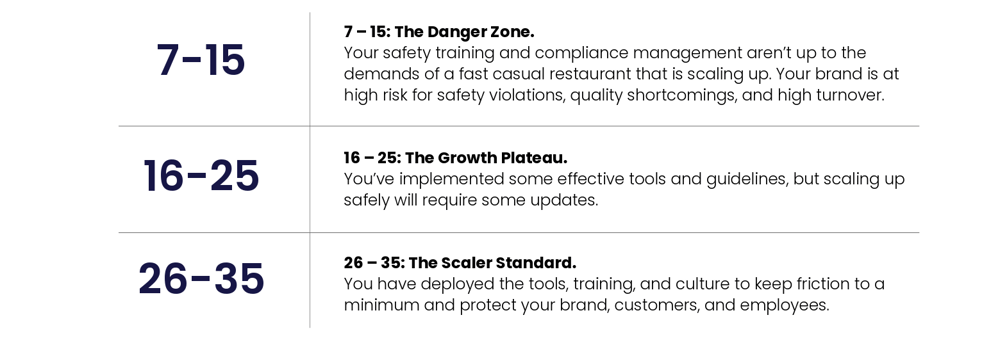
See how your company copes with these 7 red flags on a scale of 1-5.
.png "Chart (2)")
The Results: Where do you stand?
How Rootwurks Can Help
Scaling a QSR is difficult, especially without the right training or tools at your disposal. The Rootwurks platform helps fast dining establishments create standardized, trackable, and fully customizable digital training that helps mitigate risk and elevate safety culture.

Red Flag 1: The Nod and Smile Syndrome:
Rootwurks removes the language barrier with multi-lingual courseware, customizable content, and a voiceover generator that instantly creates custom narration in 20+ languages, ensuring every team member understands the training.

Red Flag 2: Over-Reliance on Shadowing:
Rootwurks helps companies create standardized digital content that upholds safety, compliance, and quality standards at all locations.

Red Flag 3: Training is Relegated to the Back Office:
With Rootwurks, training happens where the work happens to boost retention. With the platform’s ‘launch and learn’ QR codes, employees can instantly scan a code to launch courseware or finish an ongoing training plan.

Red Flag 4: Death by Binder:
Create digital training manuals that can be instantly accessed and updated across all company locations. No more taking employees off the floor for training and no more costly slowdowns to update paper training manuals.

Red Flag 5: Generic Training Content:
Companies can seamlessly upload brand-specific videos and images to build custom training that boosts retention and elevates safety culture.

Red Flag 6: The 90-Day Cliff:
Create training that fosters growth, boosts retention, and provides learners with badges and certifications to build their professional credentials.

Red Flag 7: The Compliance Black Hole:
Instantly and easily track which employees performed which training and which compliance tasks are still pending. The platform also improves audit-readiness by providing end-to-end recordkeeping for training and compliance.
Stop spotting red flags. Start setting the standard.
To learn more about how the Rootwurks platform helps QSRs tackle the challenges of compliance, high turnover, and scaling up safely, submit a form, and a member of our team will reach out.