
Report:
What Were the Biggest Training Challenges in the Food Industry in 2025?
For the food industry, 2025 saw “explosive increases” in the volume of recalled food. In the third quarter of 2025, there were 145 Food and Drug Administration recall events, the second-highest quarterly total since the first quarter of 2020, Food Safety News reported. In the same quarter, the volume of affected units surged 75.8 percent, from 14.32 million in the second quarter to 25.17 million.
In addition, the United States Department of Agriculture Food Safety and Inspection Service (FSIS) reported that Class 1 food safety recalls - the most dangerous type - affected more than 71 million pounds of recalled products.
And just as media coverage of food safety recalls has surged, American public opinion has soured on food safety. In a study published on August 25, Gallup reported that only 53% of Americans express confidence in the federal government’s regulation of food safety, a new low.
With the worsening food safety threats and fears that extended cuts to federal food safety experts will worsen the dangers, it is more imperative than ever that companies develop strong food safety cultures that mitigate risk.
In the world of food safety, there has been a growing emphasis in recent years on the importance of culture as something that companies can work for with concrete, consistent measures. But at every step of the way, food companies and food safety professionals face a host of challenges.
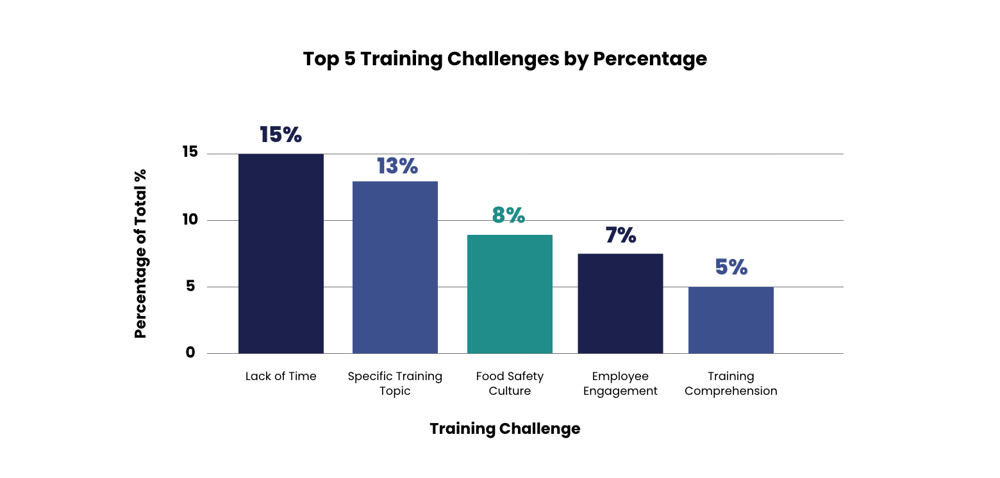
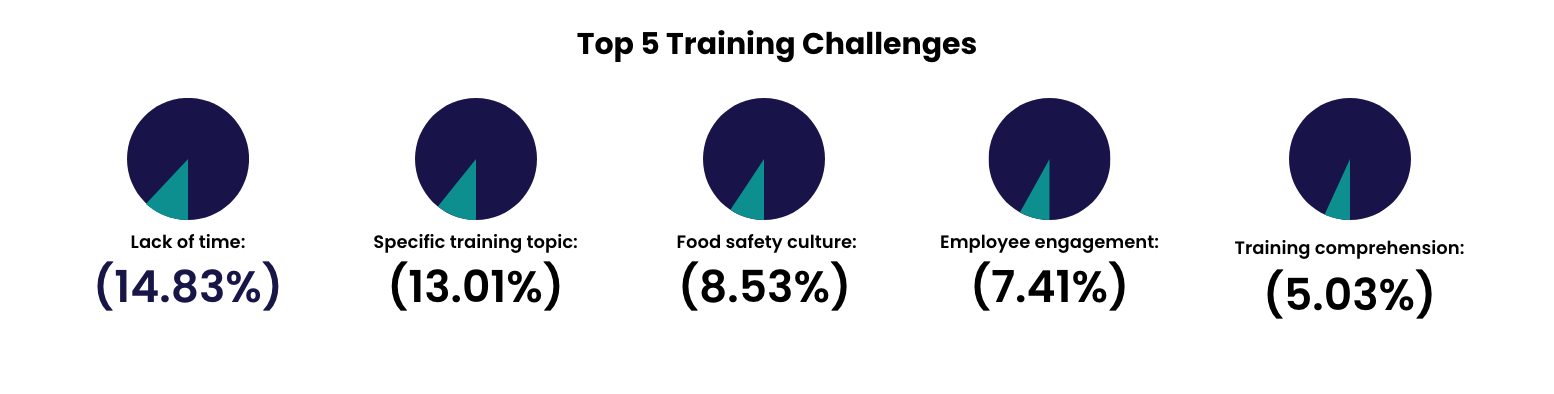
Over the course of 2025, a Rootwurks survey polled more than 700 food industry professionals - from the senior leadership level to the frontlines - to hear from them about the biggest training challenges they face. While 'lack of time' remains the most frequent hurdle, 'specific training topics' at 13.01% has emerged as a critical second, rising significantly in prominence compared to previous surveys.
The results provide a comprehensive overview of why training is challenging for food industry professionals and insights into how companies can better focus training moving forward
Front Office Challenges:
How Senior Leadership Struggles with Training

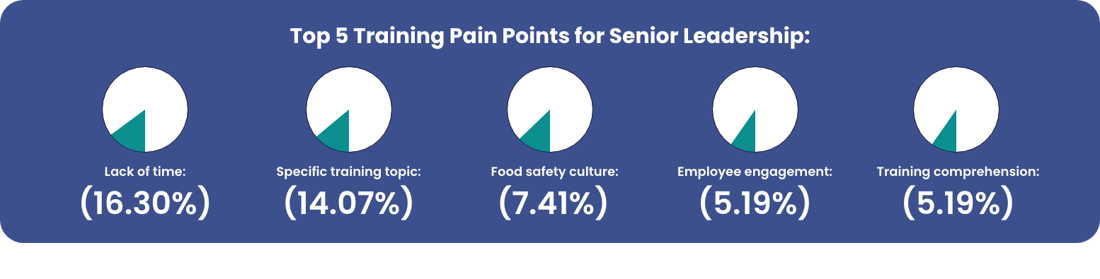
Food safety experts agree that leadership support is vital for a proactive safety culture. However, while 4.9% of staff cite a "lack of buy-in" as their main challenge, senior leaders view the problem differently.
According to the survey’s findings, 16.3% of people in senior leadership positions (defined as respondents who hold positions such as Director, General Manager, CEO, VP, and Owner) cited lack of time as their most difficult challenge, slightly higher than the overall results (14.83%).
“Specific training topic” appears second with 14.07%, also slightly higher than the overall total given by respondents, 13.01%.
The emphasis on time shouldn't come as a surprise. For general managers and directors, time is money, and it’s logical for them to pay more attention to how the amount of effort spent on training affects the company’s bottom line.
People in senior positions also highlighted "training effectiveness."
This is indicative of how senior executives and the rest of those making key budgetary decisions want to ensure that the time and money spent on training actually changes behavior, rather than becoming a recurring expense due to poor retention.
General managers and executives recognize the high cost of training, despite being removed from the frontline experience. Consequently, executives demand compliance and have no interest in funding training initiatives that fail to provide a clear, measurable impact on safety culture.
Migraines for the Middle:
The Burden of Execution
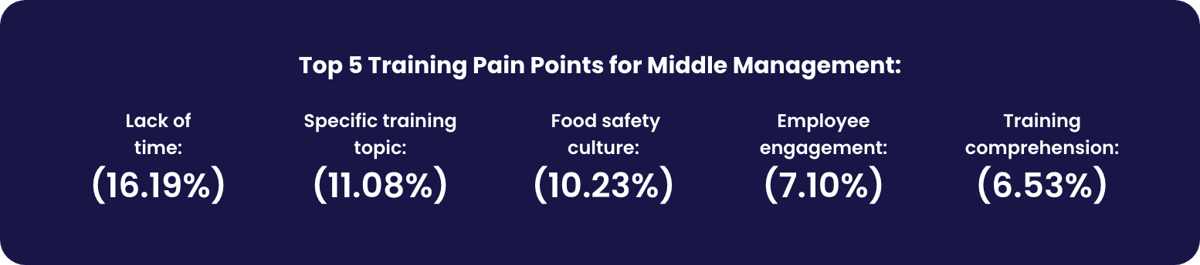
Like senior management, professionals in middle management positions cited “lack of time” as their top challenge, and at a rate that exceeded the overall average. These professionals - who hold titles such as manager, supervisor, coordinator, or specialist - typically do not face the same budgetary concerns as company executives. But managers and supervisors are responsible for the workflow at company facilities and have an intimate awareness of the time demands of training and how difficult it can be to fit into the workday.
Of the more than 700 respondents, 352 held titles that were categorized as “middle management.”
Managers and coordinators also grappled slightly less with "specific training topic,” suggesting that their training challenges are broader.
Respondents who hold middle management positions also cited “food safety culture” far more often than senior leadership did, accounting for more than 10% of all responses from professionals in management positions.
This indicates that for supervisors on the floor, food safety culture is less a theory and more a tangible, concrete way of doing things that requires concerted effort throughout the workday.
Managers also noted "training comprehension” at a slightly higher rate (6.53% vs 5.03%). his correlation is expected, given that middle management observes firsthand how comprehension gaps—or the lack thereof—disrupt daily workflows.

Frontline Hurdles:
The Top Challenges for Workers on the Frontline
Developing a resilient food safety culture depends on two factors: total management commitment and training that aligns with the realities of daily workflow.
Frontline personnel—including inspectors, technicians, and line workers—are uniquely positioned to identify where safety guidelines conflict with daily workflows. Of the total survey population, 229 respondents represented these non-management roles, providing a ground-level view of training and implementation hurdles.
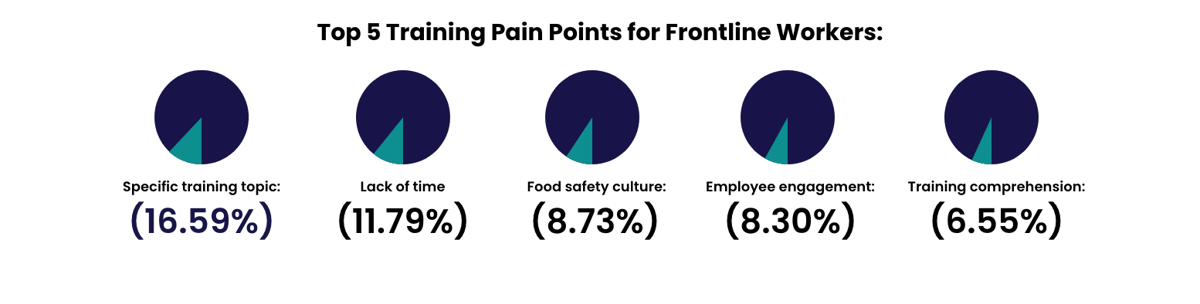
For employees outside the spheres of management and leadership, “Specific Training Topic” was by far the top result, given by 16.59% of respondents, more than the overall rate of 13%. Of these employees, 11.79% cited lack of time, less than the overall rate of 14.83%. Frontline workers were also more likely to cite lack of leadership buy-in as their top challenge.
From these results, we can conclude that for employees tasked with learning and implementing specific training topics, the challenge can be more pronounced. Also, while the time crunch may be most intimately felt by line workers, budget and strategy decisions aren’t made on the frontline. Instead, it is senior management who is more likely to draw the negative connection between training and loss of time.
In addition, workers on the frontline were less likely to mention turnover or language barriers, both of which are more likely to frustrate management and HR departments.
Big Challenges No Matter the Company Size

While the core objectives of food safety—preventing recalls, contamination, and accidents—remain universal, the obstacles to achieving them shift as an organization scales. Segmenting survey data by company size reveals distinct pressure points that evolve from small-scale operations to global enterprises.
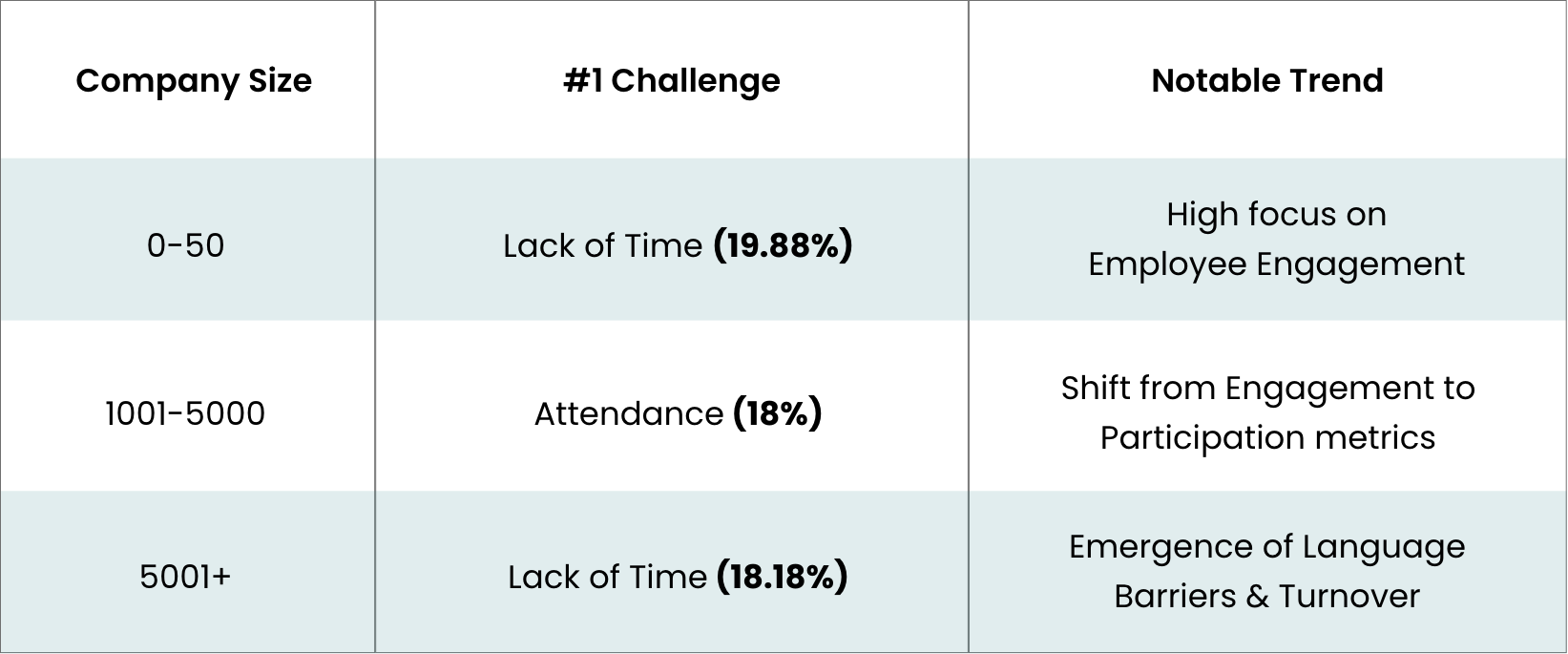
Across the board, one challenge stands out above all others: the lack of time. Similarly, "Specific Training Topics" ranked as a top-five concern across all company sizes, ranking as the second most common challenge for small businesses (under 50 employees), mid-sized firms (200–500), and large corporations (over 5,000).
The data suggests a notable shift in focus as workforce size increases. Employee engagement was only mentioned in the top five for companies with 200 or fewer employees, perhaps indicating that engagement is easier to gauge in smaller workforces. For larger organizations, "Attendance and Participation" replaced engagement as a primary concern. At this scale, management focus often shifts toward measurable metrics—tracking raw participation numbers across a vast workforce.
Overall, the results highlight how universal the time crunch is for food companies. To mitigate this, organizations need efficient, high-impact training solutions that resonate with employees immediately, reducing the need for redundant sessions that drain labor hours and budgets.

The Impact of Scale:
Top Training Challenges and Emerging Trends by Company Size
One Common Goal - Various Headaches
.png?width=1659&name=Image%20(1).png "Image (1)")
Every company wants to succeed and create safe, consistently high-quality products. But as the survey results show, the time crunch challenges companies of all sizes and professionals at every strata.
But setting aside the time crunch, the results also indicate that as companies scale up, the challenges can also scale up and change.
For the smallest companies (up to 50 employees), specific training topics presented the most significant obstacle. For companies with 51 to 200 employees, specific training topics fell to third place behind employee engagement, perhaps indicating that as the staff grows, keeping them engaged becomes more challenging.
“Lack of Leadership Buy-In” and “Language Barriers” emerge in the top 5 for the first time among midsize companies with 201-500 employees. This could indicate that, as companies grow mid-sized, it becomes harder for middle management to communicate the importance of training to upper leadership. In addition, language barriers become more pronounced as the workforce grows.
“Training Verification and Validation" broke the top 5 for companies with between 500 and 1000 employees and 1001 and 5,000 employees. For these larger organizations, verifying training and employee comprehension can become more challenging and more important as the risks of food safety incidents grow.
For the largest companies, those with 5,000 or more employees, lack of time and specific training topics were again at the top, while language barriers and food safety culture stood out as serious hurdles to overcome.
The report highlights how the challenges companies face are not universal. It outlines clear differences in the training challenges that small companies and larger firms face, and how these challenges evolve as companies scale up.
In addition, the second most cited pain point for training was a "specific training topic.” This means that learners at all types of companies struggle to meet specific training requirements for particular skills, processes, or job functions at their company. This serves as further evidence of how companies have unique training needs that are not universal across the board.
Rootwurks: Solving the Training-to-Execution Gap
To ensure food safety, countless companies turn to generic, off-the-shelf training to save time and money. But reduced employee comprehension and heightened exposure to safety and compliance failures make this a flawed calculation.
The Rootwurks platform was developed to solve the "disconnect" identified by industry leadership. Generic training often fails because it lacks the context of a learner’s specific work environment and the unique safety risks they face daily.
Why Custom Training Matters:
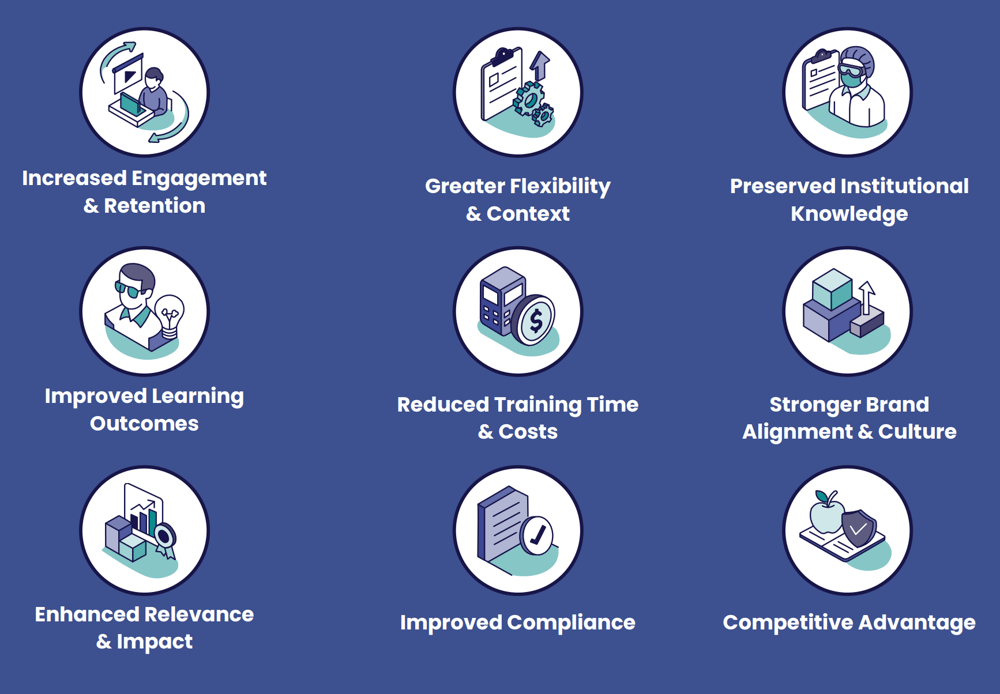

With Rootwurks, companies can use our content builder to swiftly develop unique training plans that capture legacy knowledge and augment it with our expert-designed food safety courseware.
Rootwurks provides a cost-effective, rapid-deployment solution. Using ready-made templates, organizations can build targeted programs that address real-world safety concerns on the production floor in minutes, not days. Companies can also incorporate unique branding, videos, and images to make training more impactful, relevant, and likely to connect with and resonate with learners.
Given that “Lack of Time” was the most frequently mentioned challenge in our study, the need to swiftly create more impactful training is hard to overstate. Learners are more likely to retain this training, reducing the time spent on repeated learning that takes workers away from the workflow.
While customization is a core pillar of the Rootwurks approach, it is only one way the platform drives operational efficiency.
6 Ways Rootwurks Eases Training Woes and Saves Time and Money


AI-Powered Digitalization:
Convert paper binders and static PDFs into interactive digital guides.
AI Translations & Voiceovers:
Erase the language barrier and boost retention and safety with instant translation into 20+ languages.


Audit-Ready Recordkeeping:
Stop wasting time rooting through filing cabinets with digital, real-time recordkeeping of compliance, training, and food safety.
Zero-Stress Deployment:
Onboard faster and smarter with automated training, planning, and enrollment.

Easy Course Editor:
Digitize your legacy knowledge and upload custom videos and images that protect your "secret sauce" and unique brand culture.
Launch & Learn QR Codes:
Get training out of the boardroom and onto the floor with mobile-ready micro-learning and checklists at the point of work.
Stop Training Against the Clock. Start Training for Results
The data is clear: "Lack of Time" is the industry’s greatest hurdle. Rootwurks solves it with high-impact, rapidly deployable training for modern food facilities.
Request a personalized walkthrough of the Rootwurks platform today!